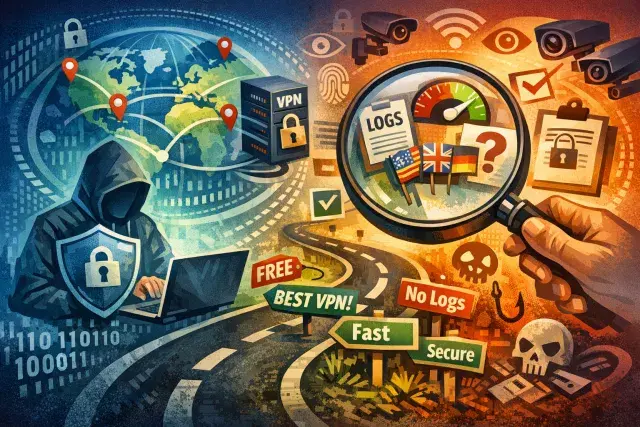
The internet was never designed with your privacy in mind, and decades of commercial development have made that gap worse. Every unencrypted connection, every public Wi-Fi session, every streaming login is a potential exposure point - for advertisers, data brokers, and worse. A virtual private network, or VPN, addresses all of this for less per month than a single cup of coffee, and right now, the leading services are competing aggressively on price to win long-term subscribers.
Why a VPN Is No Longer a Niche Tool
VPNs were once the exclusive domain of corporate IT departments and privacy advocates with strong technical opinions. That has changed. The widespread shift to remote work, the explosion of public Wi-Fi dependency, and the growing sophistication of data harvesting have pushed VPNs into the mainstream. When you connect through a VPN, your traffic is encrypted and routed through a server in a location of your choosing. Your internet service provider sees nothing meaningful. Websites see the VPN server's address, not yours. Advertisers tracking you by IP lose their thread.
Beyond privacy, a VPN has a straightforward financial case. Streaming platforms vary their libraries by country, and a VPN lets you access content licensed elsewhere. Some e-commerce sites and booking platforms display different prices depending on your detected location - a VPN lets you shop around without changing your physical seat. These aren't exotic use cases. They are ordinary, everyday ways a VPN pays for itself.
What the Current Market Offers - and at What Price
The competitive pressure among VPN providers has driven prices to genuinely low levels, particularly on long-term plans. Three services currently stand out for the depth of their offerings relative to cost.
- CyberGhost VPN - available for as low as $1.75 per month on a long-term plan, making it one of the most accessible entry points in the market.
- Surfshark - currently among the cheapest monthly options across all tiers, starting around $1.78 per month for its Starter plan. Higher tiers add antivirus protection, data breach monitoring, private search, and a full identity protection suite including data broker removal through its Incogni feature.
- ExpressVPN - structured across three tiers starting at $2.79 per month. Basic includes full VPN access across platforms and a disposable email tool. Advanced adds a tracker blocker and password manager. Pro introduces a private AI assistant designed to keep queries off training datasets.
- NordVPN - offers four subscription tiers. Its Basic plan includes the full VPN with specialty servers for Tor access and torrenting, plus Meshnet, a feature that allows users to route traffic through their own devices across locations. Higher tiers add malware protection, ad blocking, and password management.
Surfshark's One+ tier represents a notable expansion of what a VPN subscription can mean: it includes licensed investigator access, mental health support services, and financial reimbursement for identity recovery costs. These additions move the product closer to a comprehensive digital safety plan than a simple privacy tool.
The Hidden Cost of Not Using One
The argument against VPNs usually comes down to cost or inconvenience. Both objections have weakened considerably. On cost, sub-two-dollar monthly pricing on multi-year plans is now common. On convenience, modern VPN apps require no technical knowledge - installation takes minutes, and connecting takes a single tap.
The cost of not using a VPN is harder to quantify but worth considering seriously. Data brokers compile and sell detailed personal profiles drawn from browsing behavior, location data, and online activity. Identity theft, credential exposure, and targeted manipulation are not abstract risks - they are documented, recurring harms affecting millions of people annually. A VPN does not eliminate all digital risk, but it removes several of the most exploitable vulnerabilities from the equation.
Banking on public Wi-Fi without a VPN sends financial credentials over connections you do not control and cannot verify. The encryption a VPN provides in that moment is not a luxury feature - it is basic operational security. At current prices, the math is straightforward: the cost of a long-term VPN subscription is a fraction of what a single incident of credential theft could cost in time, stress, and financial recovery.
Choosing the Right Tier Without Overspending
Most users will find that a base-tier subscription covers everything they genuinely need: encrypted browsing, IP masking, streaming access, and safe use of public networks. The value of premium tiers depends on how much of your digital life you want consolidated into a single service. Password managers, antivirus tools, and data breach alerts are each available as standalone products - if you already use them, upgrading a VPN tier to include them may eliminate redundant subscriptions. If you do not, the bundled cost at VPN pricing is competitive.
Sales on long-term plans are frequent and substantial. Providers routinely discount two-year commitments by significant margins to attract users who will remain on the platform. For anyone who has been hesitant, the current pricing environment is about as favorable as it is likely to get. The underlying case for using a VPN has only grown stronger - and the financial barrier to entry has rarely been lower.