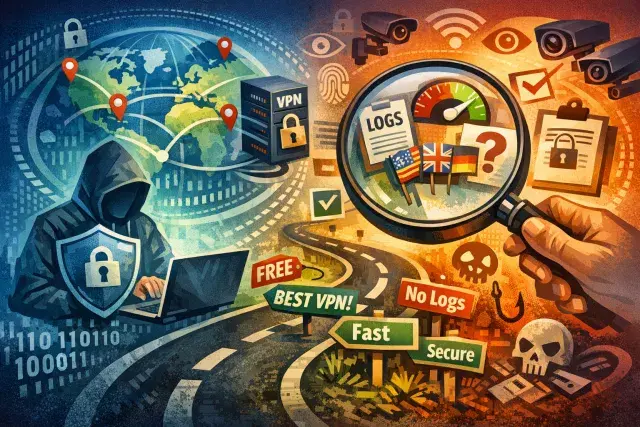

Virtual private networks have become one of the most heavily advertised consumer security tools on the internet. The sales pitch is familiar: a VPN can hide your IP address, add privacy on public networks, and help limit how much of your online activity is exposed to internet providers, advertisers, or other intermediaries.
That promise is real, but incomplete. A VPN is not a cure-all for surveillance or cybercrime, and the difference between a useful service and a disappointing one often comes down to speed, transparency, server reach, device support, and how much trust a company has earned.
What a VPN can actually do
A VPN routes your internet traffic through an encrypted connection to a remote server. In practical terms, that means websites and services often see the VPN server’s address rather than your home IP, and anyone monitoring a local network has a harder time inspecting your traffic. That can matter when using public Wi‑Fi, reducing location-based tracking, or accessing region-specific content libraries.
It also helps explain why VPN marketing can overstate the product. A VPN does not make a user anonymous by default, does not prevent every form of tracking, and does not replace good account security. Cookies, browser fingerprinting, weak passwords, and phishing attacks remain serious risks whether a VPN is on or off.
Why the market is crowded — and uneven
The current VPN market ranges from beginner-friendly apps to highly configurable services aimed at power users. Free plans can be useful as a trial run, but they usually come with trade-offs: lower speeds, fewer server locations, single-device limits, or caps on data. Premium plans tend to widen access to faster servers, more countries, streaming support, and broader device coverage.
Among the services highlighted in recent testing, Hide.me stands out for offering an unusually generous free tier with access to multiple countries and no obvious pressure to hand over personal information. CyberGhost appeals on scale, with a vast server footprint, though that breadth may come with inconsistent speeds. IPVanish offers unlimited connections and broad country coverage, but privacy-conscious users may pay close attention to jurisdiction and past concerns around logging. Windscribe remains attractive for flexible pricing and a solid free option, while TunnelBear keeps the barrier to entry low with simple design and clear features for newcomers.
What separates a strong VPN from a weak one
For many users, the best VPN is not the one with the loudest advertising campaign but the one that fits a specific need. A household with many devices may care most about unlimited or high connection caps. A traveler may prioritize stable speeds and a wide spread of countries. Someone focused on privacy may look for a clear no-logs policy, modern protocols such as WireGuard or OpenVPN, and safeguards like a kill switch and split tunneling.
Private Internet Access illustrates the trade-off well. It offers broad customization, large server coverage, and features that advanced users tend to value, but that same flexibility can make the software less approachable. The same pattern appears across the market: the more configurable a VPN becomes, the more likely it is to demand some technical confidence from the person using it.
The buying decision is really about trust
Consumers shopping for a VPN are not merely buying software. They are choosing a company to sit between themselves and the wider internet. That makes transparency crucial. Trial periods, refund windows, support quality, ownership structure, and the clarity of privacy policies all matter alongside speed tests and streaming access.
The most sensible approach is to treat rankings as a starting point rather than a final answer. Free tiers can help test usability, but the stronger question is whether a provider balances privacy, performance, and clarity in a way that matches how you actually go online. For a tool built around security, trust remains the feature that matters most.